
At high peeling speed, the rotary lathe and output conveyor fall out of sync as the log diameter decreases, resulting in veneer tears, folds, and waste. The EN-301 eliminates this by continuously measuring the log and commanding the conveyor to match it, sheet by sheet, from the first peel to the last.
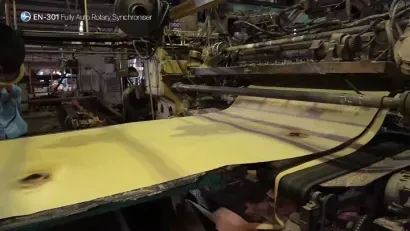
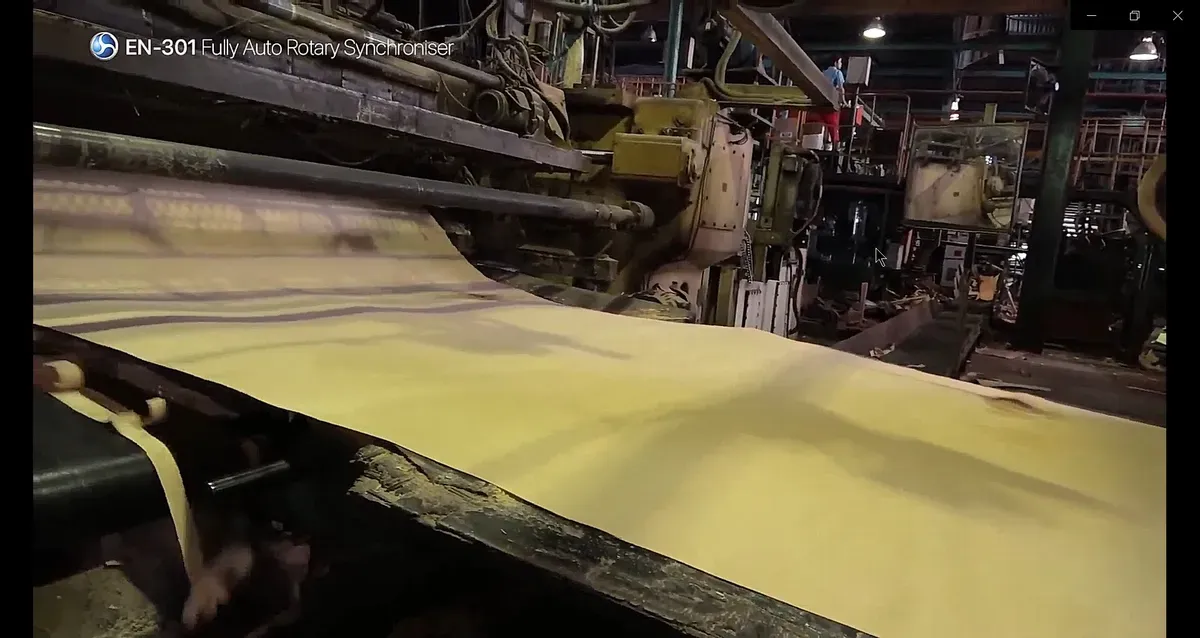
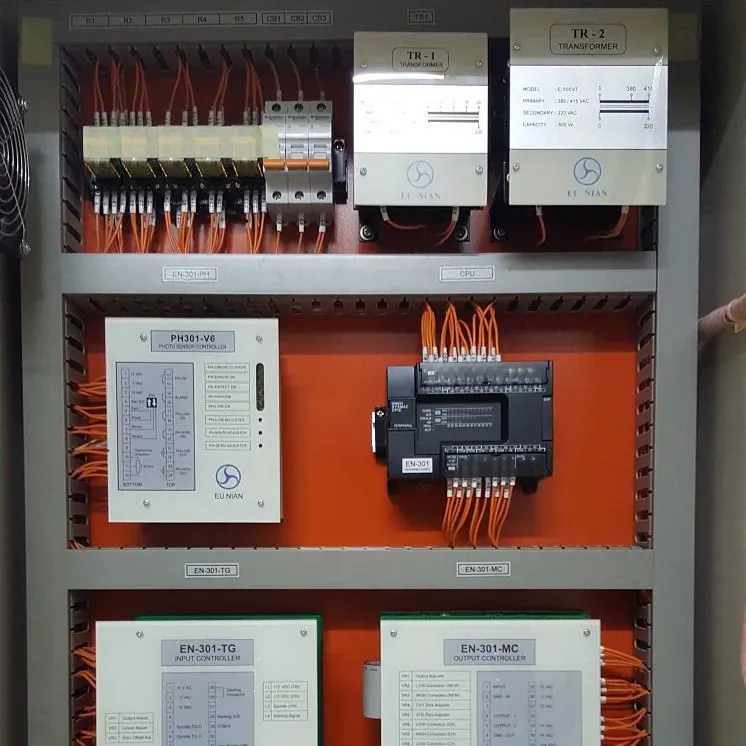
Every rotary spindle lathe has the same fundamental challenge: the log diameter decreases continuously as peeling progresses. A 400 mm diameter log becomes a 60–100 mm core over the course of a single peel cycle. The lathe spindle turns at a roughly constant RPM, but as the diameter halves, the linear surface speed of the veneer exiting the lathe also halves. The output conveyor must track this change in real time, and in traditional lines, it doesn't.
When the conveyor runs faster than the veneer is being produced, the sheet stretches and tears. When it runs too slow, the veneer folds and piles up at the output platen. Manual operators can attempt to adjust conveyor speed by watching the veneer and turning a dial, but at modern peeling speeds the diameter changes too fast for human reaction time to keep up consistently across a full shift.
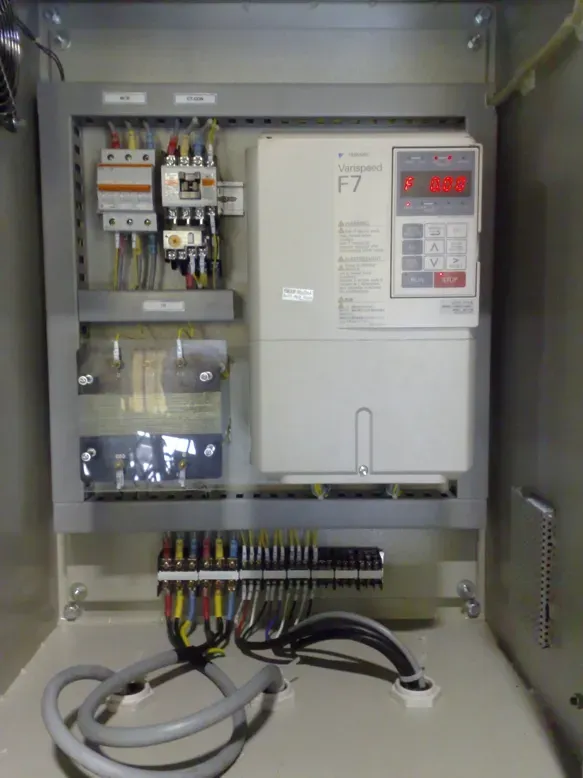
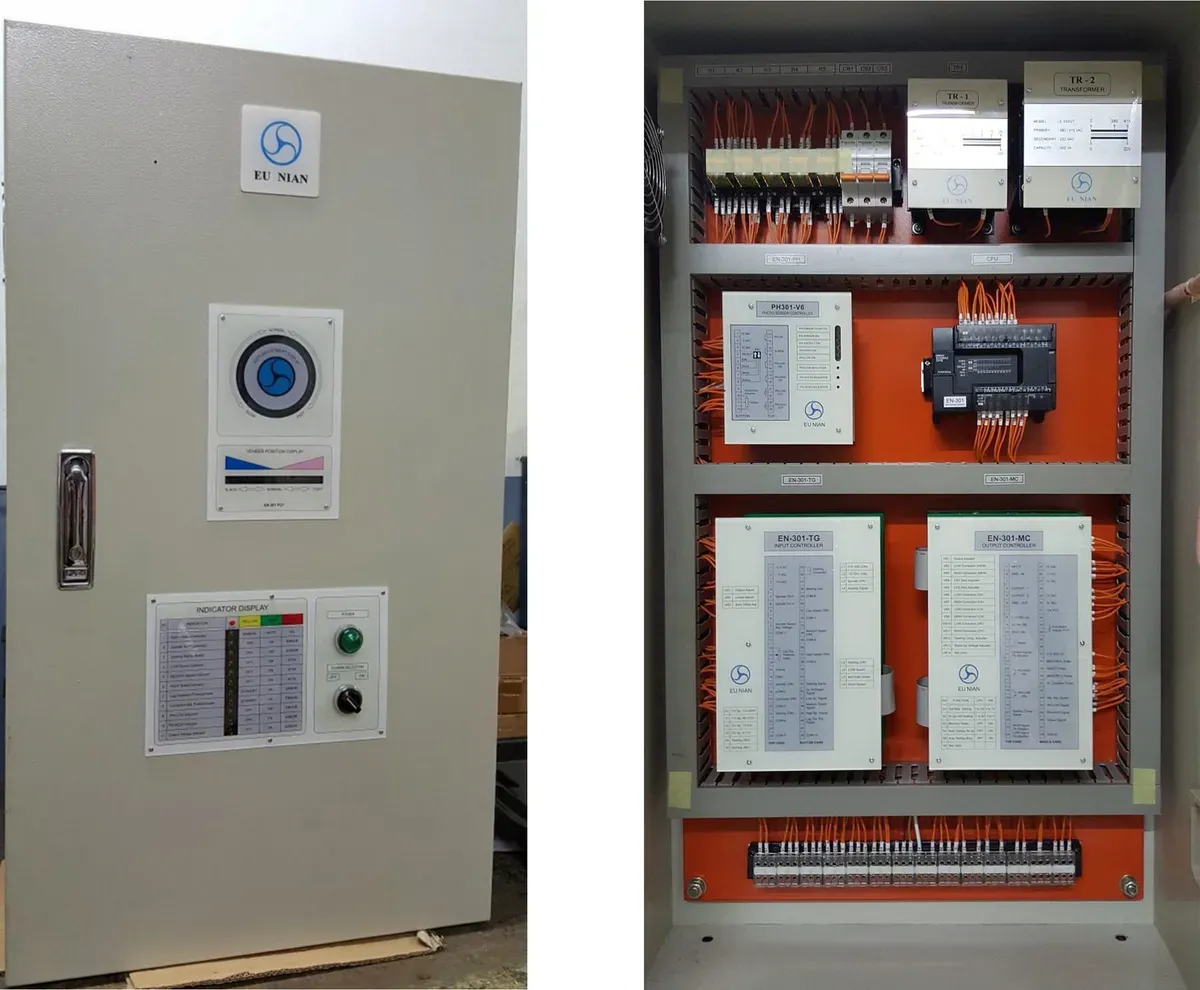
The EN-301 Veneer Synchronization Control system solves this with a potentiometer mounted on the knife carriage. As the knife advances inward following the peeling surface of the log, the potentiometer continuously reports the exact current log diameter to the EN-301 microprocessor. The processor calculates the required conveyor speed for that diameter and sends a command to the conveyor motor drive — typically faster than a human can perceive the change.
Photoelectric sensors under the output platen verify the veneer tension in real time, closing the feedback loop. The system also handles motor start-up compensation via the VR12 circuit, eliminating the energy spike and veneer damage that occurs when the conveyor motor starts from rest at the beginning of each log. For the peeling line operator, EN-301 removes one of the primary sources of veneer waste and one of the most demanding manual adjustment tasks in the production cycle.
The EN-301 integrates directly with the rotary lathe output. Click any node to view a detailed description of the sensing, calculation, or control step at that stage.
Watch the EN-301 closed-loop synchronization system operating on a live peeling line: diameter sensing, real-time speed calculation, and tension verification working together.
Get In Touch
Tell us your lathe type, current peeling speed, and production challenges. Our engineering team will assess your line and recommend the right EN-301 configuration within 1 business day.