
Transform biomass waste into high-density, globally traded solid fuel — from compact containerised lines to full industrial-scale production. Zero chemical binders. Natural lignin bonding.
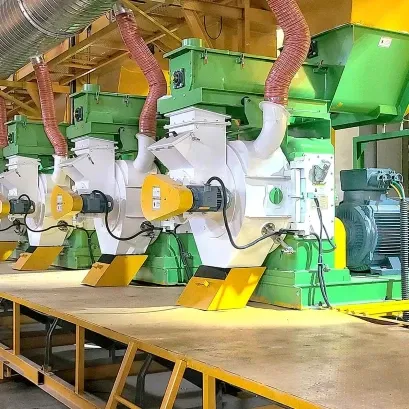
Biomass waste — sawdust, wood shavings, wood chips, agricultural residues — sits quietly at the edge of most processing operations, treated as a disposal problem. Our industrial pelletizing systems change that equation entirely, transforming this low-value, difficult-to-handle material into standardised high-density biomass pellets: a globally traded solid fuel that opens direct access to industrial heating, commercial power generation, and ESG-driven carbon-credit markets. What costs money to dispose of starts generating revenue instead.
We offer two system architectures matched to production scale. For medium-scale operations, our compact containerised system ships factory-tested and arrives production-ready within days, with no complex plant construction required. For larger industrial requirements of 10 or more tonnes per hour, we engineer, manufacture, and commission fully custom turnkey production lines to exact facility specifications. Both paths lead to the same outcome: Ø6–8mm pellets meeting EnPlus A1 quality standards, the internationally recognised benchmark for premium biomass fuel.
Across both scales, the production process follows the same fundamental chain: moisture conditioning, particle size reduction, high-pressure ring-die pressing, and automated cooling and sieving. There is one critical prerequisite upstream: feedstock dried by our industrial biomass dryer to within the 7–12% moisture window that activates the wood's natural lignin binder under pressure. No chemical additives are required. The pellet's structural integrity comes entirely from the lignin the wood itself already contains.
Seven integrated steps across two complementary systems. The plant system handles bulk material preparation and post-press finishing. The core pressing system physically transforms it into pellets. Click any block or step to explore its role in detail.
Compact containerised systems (1.4–1.8 t/h) give medium-scale producers a fast path to market: factory-tested, CE-certified, and deployable in days. Industrial turnkey lines (10+ t/h) are engineered to exact facility requirements. Both architectures deliver the same EnPlus A1 output.
Three rollers deliver more compression cycles per die revolution than a standard two-roller setup, producing denser and more consistent pellets even from variable biomass inputs. Built-in central lubrication and active roller cooling extend die and roller service life significantly.
The press activates the wood's own lignin at 130–160°C. No binding agents, resins, or chemical additives are required. That means lower production cost (no additive consumables) and stronger market positioning: EnPlus A1 certified pellets with purely natural composition command premium pricing in EU and Asia-Pacific markets.
The system is designed around the 7–12% MC feedstock specification. Integration with upstream drying ensures this window is maintained automatically, with no manual moisture testing required during continuous operation. Moisture deviation alerts from the drying system provide early warning before out-of-spec material reaches the press chamber.
The containerised unit occupies 10.5m × 2.98m of floor space. Control architecture includes a high-resolution touch HMI, remote monitoring on mobile devices, and OPC UA compatibility for integration with SCADA systems. The isolated control room within the container provides noise attenuation and dust ingress protection for sensitive electronics.
An integrated spark detection and extinguishing system identifies ignition sources and neutralises them in real time. A dust recirculation filter maintains clean internal air, preventing combustible particulate accumulation. Systems are designed to meet European ATEX zone requirements, essential for insurer and regulatory compliance in any production environment.
Heavy-duty press systems use a reduced-width die design that narrows the non-functional die shoulders while maintaining the full working press width. This geometry reduces cantilevered mass on the main shaft, decreasing bending moment, reducing bearing stress, and extending support assembly lifespan. Less steel per die also means lower embodied energy and reduced scrap at end of die lifecycle.
Get In Touch
Our engineering team will review your production requirements and provide a customised pelletizing system proposal within 1 business day.