
The upstream prerequisite that unlocks every downstream biomass value chain; pelletizing, gasification, and carbonisation. Continuous, modular, and compatible with any existing heat source.
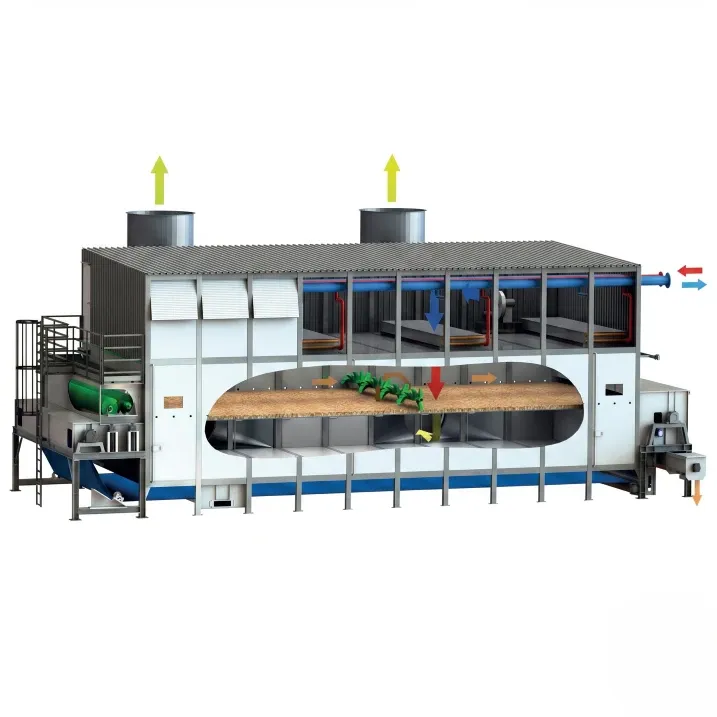
Every high-value biomass process shares one upstream dependency: moisture control. Wet biomass entering a pellet press produces fragile, low-density pellets that fall apart before they reach market. Wet feedstock in a gasification reactor wastes its thermal energy evaporating water instead of making syngas. Wet biomass in a carbonisation furnace creates steam-pressure fluctuations that crack the charcoal as it forms. Our low-temperature belt drying systems address this at the source, continuously bringing biomass moisture down to the precise level each downstream process needs to perform.
Operating within a 70–90°C thermal window is a deliberate design choice. Below that range, drying is too slow to be economical. Above it, volatile organic compounds start releasing, material quality degrades, and fire risk climbs. This window removes both interstitial and surface moisture efficiently while leaving the feedstock's caloric value, structure, and chemistry completely intact. High-heat drum drying at 300–400°C is faster, but it brings scorching, VOC release, and fire hazards that our low-temperature architecture avoids entirely.
The system is modular by design, which means it fits into any existing biomass facility regardless of scale or layout. A universal heat interface accepts whatever heat source is already available on-site: hot water, steam, or recovered flue gas, with no new heat generation infrastructure required. An optional heat recovery module captures and recycles thermal energy from exhaust air, lowering operating costs over time. As the foundational upstream step, what happens here sets the ceiling for everything downstream.
Eight sequential steps make up the continuous operational cycle of the low-temperature belt drying system, from material infeed through drying, discharge, and automated belt maintenance. Click any step to read its detailed description.
Removes moisture without touching caloric value. At 70 to 90°C, VOC release does not occur and the operating temperature stays well below biomass auto-ignition point. Feedstock leaving the dryer is chemically and calorically identical to what went in: only moisture has been removed.
Connects to any heat source already present in the facility: hot water circuits, steam lines, or flue gas from biomass or fossil-fuel boilers. No new heat generation infrastructure is required. That compatibility alone can remove a significant capital line item from the project budget.
As biomass travels down the belt, the outer surface dries faster than the interior and forms a crust that blocks airflow. Turning devices positioned along the belt break that crust, exposing the wetter interior to fresh airflow. The result is that every particle receives equal drying exposure, producing consistent output moisture content across the full belt width.
A porous mesh belt that drifts laterally creates gaps that let air bypass the product bed rather than pass through it, and that gap kills drying efficiency. The automatic alignment system monitors belt edge position continuously and corrects any drift before it develops, protecting both drying efficiency and belt lifespan.
The optional recovery module captures latent thermal energy from exhaust air and puts it back to work, reducing kWh consumed per kg of water evaporated. Facilities with biomass boilers can also integrate the flue gas pathway, capturing a second layer of heat that would otherwise leave permanently through the stack.
Maintenance panels provide rapid access to the belt underside without shutting the system down, so service happens without interrupting production. The chain conveyor installs on either side of the unit to support symmetrical plant layouts. Two dryer units can share a single intake or discharge point, and modular section design allows capacity to grow incrementally as production demand increases.
Get In Touch
Tell us about your biomass type, moisture levels, and throughput. Our engineering team will put together a customised drying system configuration and respond within one business day.